How to hire a landscaper in Brookline, MA
Landscaping splits into two different businesses — maintenance and design/build — and knowing which one you need is the most useful thing you can bring to a first conversation. Drainage, base prep, and plant selection drive cost and outcome more than the visible plantings, so a great pro will spend time on those before showing you photos.
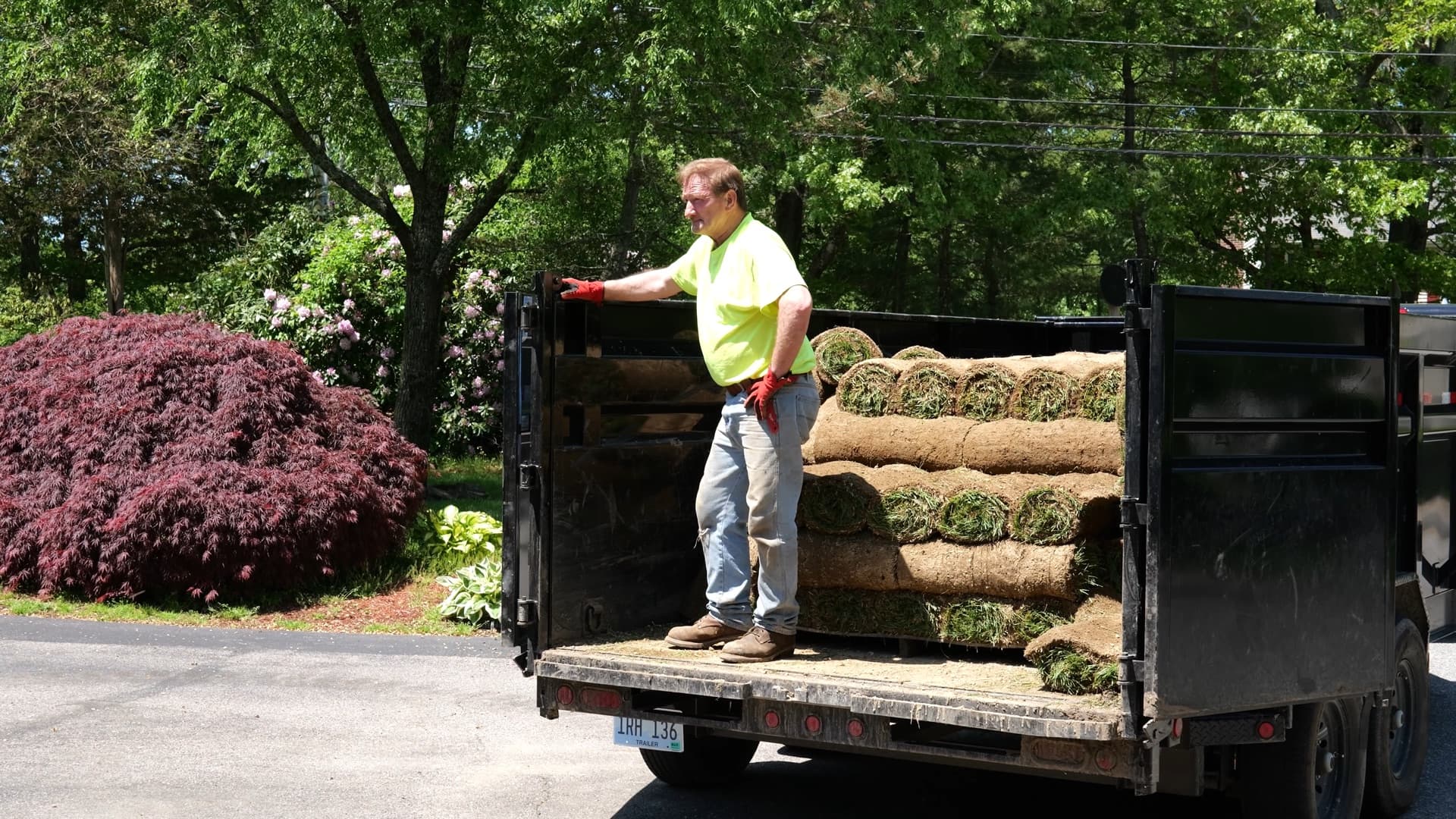
What to know before you hire a landscaper in Brookline
Brookline housing ranges from Coolidge Corner Victorian brick rowhouses and 1890s–1920s brownstones to Queen Anne and Colonial Revival mansions in Chestnut Hill and Fisher Hill. Many of the row houses and triple-deckers have been converted to duplexes or condominiums, with intricate brickwork, mansard roofs, and original plaster interiors.
Brookline shares Boston weather — cold winters with significant snowfall, humid summers, and routine ice-dam exposure on older slate and asphalt roofs.
How we price it
These are the factors that move a quote up or down. Knowing them helps you share the right context upfront so we can quote your specific situation accurately — and so you can compare bids on apples-to-apples scope.
The single biggest hidden cost in any landscape job. Negative grading toward the foundation, undersized downspout extensions, clay-heavy soils, and existing stumps or buried debris all have to be fixed before sod, beds, or hardscape can go in. A patio installed over un-corrected drainage will heave within two freeze-thaw cycles. Grading and french drain work is invisible in the finished photos but accounts for 20-40% of a typical project budget — ask your pro to walk you through this part of the scope so you understand what you are paying for.
In southern New England freeze-thaw, base prep is the difference between a 25-year patio and a 5-year patio. Foot-traffic pavers need 4-6 inches of compacted 3/4-inch processed gravel; driveways need 8-12 inches. Each lift goes down in 3-4 inch increments and gets plate-compacted before the next layer. The base spec is a great thing to discuss with your contractor — ask what depth they excavate to and how many compaction lifts the bid includes, and get the answer in writing so everyone is aligned.
The same Inkberry Holly comes as a $14 3-gallon liner, a $45 7-gallon, or a $120 B&B specimen. Installation labor is roughly constant per hole, so installed price varies less than nursery price — but the visual maturity and survival rate differs sharply. Smaller plant sizes are a legitimate way to hit a tighter budget, just know the trade-off: 3-gallon shrubs typically take 4-5 years to fill in. Ask for plant sizes alongside counts and species so you can compare bids apples to apples.
Sod is instant lawn at $1.40-2.50/sqft installed (Kentucky bluegrass / fescue blend), but requires aggressive watering for 3-4 weeks and only takes if the bed underneath is properly prepped (4-6 inches of screened loam, fine grade, no rocks larger than golf-ball). Seed is $0.10-0.30/sqft material plus prep, takes 4-6 weeks to establish, and struggles on slopes or poor soil. Hydroseed splits the difference at $0.30-0.80/sqft installed. Ask your pro what soil prep is included — that matters more than the choice between sod and seed.
New beds need 6 inches of amended soil, defined edges (cut spade edge, steel edging, or stone), and 2-3 inches of mulch. Existing beds need re-edged, weeded, and refreshed annually — mulch breaks down to half its volume in a year. Mulch options range from double-shredded hemlock (fades to grey in a season, cheaper) to dyed hardwood (holds color 18-24 months, costs a bit more) — ask which the bid uses so the look matches your expectation.
Sprinkler systems run $550–950 per zone fully installed (head count varies). A typical quarter-acre property is 4-6 zones. The expensive variable is what is in the way: trenching across an existing driveway, going under sidewalks, tying into an existing supply with backflow preventer. Drip irrigation for beds adds $1.50-3.00/linear ft of bed. Annual blowout and spring start-up is $80-180 each.
Japanese knotweed, Asiatic bittersweet, multiflora rose, and burning bush are expensive removals — knotweed in particular requires multi-year glyphosate or imazapyr treatment because root fragments regenerate, so mechanical cutting alone makes the problem worse. Any work within 100 feet of a wetland (MA) or 50-200 feet of a coastal feature (RI CRMC) triggers conservation commission review and may need a licensed wetland scientist or landscape architect on the plan. A good pro will surface these constraints early.
Project sizes we handle
Three scopes that cover almost everything in this trade. We'll help you place your project on the right tier based on the property, what you've already tried, and how long you plan to stay.
Existing beds re-edged and re-mulched, hedges pruned, a season or two of perennials added to fill gaps, sod patched where damaged. No grading, no hardscape, no irrigation changes. The right choice when the bones are fine and you just need it to look maintained.
- Double-shredded hardwood mulch (2-3 inches, refreshed annually)
- Spade-cut bed edges or basic plastic edging
- 1-gallon perennials, 3-gallon shrubs to fill gaps
- Hand-spread cleanup and pruning
Best for: Move-in cleanup, pre-listing curb appeal, or annual seasonal refresh on a landscape that fundamentally works.
A scaled planting plan (not just "we will add some shrubs"), new beds with amended soil and steel edging, native-forward plant palette at 5-7 gallon sizes for density on day one, drip irrigation in beds, and basic grading corrections at downspout outlets. Project-driven, not a maintenance program.
- Steel or aluminum edging (10-15 year life)
- 5-7 gallon shrubs at proper spacing
- Drip irrigation with smart controller integration
- 6 inches of amended soil in new beds, geotextile under stone areas
Best for: Homeowners replacing an aging or generic landscape with something that looks intentional and survives without weekly babysitting.
Stamped survey or measured site plan, drainage design (yard drains, french drains, regrading), engineered hardscape (paver patio, retaining walls, walkways) built to NCMA spec, planting plan with specimen B&B trees and natives, full irrigation with rain/freeze sensors, low-voltage landscape lighting. Plan first, build second — usually phased over 1-2 seasons.
- Belgard, Techo-Bloc, or Unilock pavers on 6 inches compacted base + 1 inch bedding sand
- NCMA-spec segmental retaining walls with geogrid reinforcement (walls >4ft need engineering)
- B&B trees (2-2.5" caliper), specimen evergreens, layered native shrub/perennial palette
- Polymeric sand joints (Pavermate Z3, SRW), Hydro Defender or G2 product class
- Low-voltage LED path and uplighting (FX Luminaire, Kichler)
Best for: New construction, full backyard reimagination, or properties where drainage problems have to be solved before any visible improvement makes sense.
What we reach for and why
The materials and techniques behind a job that lasts — so you know what's in the quote and why it's there.
Excavate to 7 inches below finished grade for foot traffic (10-13 inches for driveways). Lay geotextile fabric on the subgrade to prevent base migration into clay. Spread 3/4-inch dense graded base in 3-4 inch lifts; plate-compact each lift before the next. Screed 1 inch of coarse bedding sand (concrete sand or ASTM C33, never stone dust). Lay pavers, sweep polymeric sand into joints, mist to activate, run plate compactor with pad over the surface.
Polymeric sand contains a polymer binder that activates with water, locking joints against weeds, ants, and wash-out. Pavermate Z3 (SRW Products) and Hydro Defender are the contractor-grade choices. Joints need to be at least 1/8 inch wide and the sand has to fill to within 3 mm of the surface. Critical step everyone gets wrong: lightly mist (do not soak), let it set, then mist again — flooding the joints causes haze on the paver face.
National Concrete Masonry Association standards: compacted granular base footing, leveling pad, geogrid reinforcement layers tied into the wall every 2-3 courses for walls over 3 feet, compacted gravel infill behind the wall, perforated drain pipe at the base wrapped in filter fabric, daylighted to a non-erodible exit. Walls over 4 feet in RI and MA require an engineered stamp and a building permit — non-negotiable.
Plants that handle southern New England climate, coastal salt aerosol, deer pressure, and clay-heavy soils without irrigation life support. Shrubs: Inkberry Holly (Ilex glabra), Summersweet (Clethra), Virginia Sweetspire (Itea), Oakleaf Hydrangea, native Viburnums. Perennials: Switchgrass (Panicum), Little Bluestem (Schizachyrium), Mountain Mint (Pycnanthemum), Black-eyed Susan, Coneflower. Trees: Serviceberry, Eastern Redbud, Sweetbay Magnolia, native oaks.
New England soil is glacially deposited — rocky, often acidic, with clay or sandy pockets. Healthy beds need 6 inches of screened loam tilled into the existing 2-3 inches of native soil, with compost or peat amendment for clay-heavy lots. "Screened loam" should be 1/2-inch screened, not the bargain bin "fill" some yards sell. A soil test ($25 at UMass or URI extension) tells you pH and nutrient gaps — most New England lots need lime annually.
Rachio 3 or Hunter Hydrawise replace the dumb mechanical timer with weather-aware scheduling. They pull local ET (evapotranspiration) data, skip cycles after rain, dial back in cool weather, and let you adjust zones from a phone. RI and MA require a freeze sensor on residential irrigation in some municipalities; all systems need a state-approved backflow preventer (PVB or RPZ) inspected annually.
Japanese knotweed requires foliar glyphosate (54%+ AI) or imazapyr applied in late summer when sugars translocate to roots, repeated for 2-3 consecutive seasons. Cutting alone makes it worse — every node regrows. Bittersweet vines need cut-stump glyphosate at the base. Burning bush and barberry: cut to ground, herbicide-treat stump, mulch heavily, monitor for regrowth. Removed material has to be bagged and landfilled, not composted — knotweed re-roots from a centimeter of cane.
What to watch for
A short list of the things that actually matter for safety, code, and your peace of mind. Worth confirming with any pro before you sign — we expect these questions and we're happy you ask.
What else might come up
Most projects touch more than one trade. Here's where this one usually overlaps with others — so you can plan ahead instead of scrambling.
Surface grading and downspout extensions solve 70% of wet basements before you ever need interior waterproofing. A landscape contractor with grading equipment can fix the upstream cause for a fraction of basement system cost. Get the landscape grading bid before signing for interior drainage.
Even perfect landscape grading cannot beat a downspout dumping 800 gallons per inch of rain next to the foundation. Tie downspouts into 4-inch corrugated extensions that daylight 10+ feet from the house — easiest line item to add when grading is already open.
Landscape crews handle small-tree planting and basic limb work. Anything over 4-inch caliper, near power lines, or requiring climbing belongs to an ISA-certified arborist. A great landscaper will tell you when a job is outside their scope and recommend the right specialist.
In heavy deer country, an 8-foot fence is the only reliable solution — no plant palette outruns deer in winter. Pool fences trigger code (48-inch min, self-closing gate). Schedule fence install after grading and before final plantings so post holes are not chasing buried irrigation lines.
Never trench, regrade, or place hardscape over a leach field — it compacts the field and kills the system. Wellheads need 100-ft setback from any chemical application. A landscape contractor working on a septic property should ask for the as-built before designing.
What jobs typically cost
Fixed-rate pricing for our most common landscape professional jobs. Materials included where noted. Hourly rate for everything else: $75/hr.
Spring Cleanup (medium yard)
Debris removal, bed edging, first mow, light pruning
1 day – 2 dayLabor only$600–$900Mulch (6 yards)
Deliver and spread mulch across all beds
4 hours – 6 hoursLabor only$300–$450Lawn Aeration + Overseeding
Core aerate and overseed for thicker lawn
3 hours – 5 hoursLabor only$225–$375Shrub & Hedge Pruning
Shape hedges and remove dead wood
2 hours – 6 hoursLabor only$150–$450Seasonal Plantings
Plant annuals or perennials in beds
2 hours – 1 dayLabor only$150–$600Fall Cleanup (medium yard)
Full leaf removal, bed cutback, final mow
1 day – 2 dayLabor only$750–$1.1kBiweekly Mow & Maintain
Mow, edge, string trim, and blow — every 2 weeks
2 hours – 4 hoursLabor only$150–$300
Maintenance visits run $150–350 for mow-trim-blow on a quarter-acre. Spring/fall cleanups $400–900. Design/build hardscape and planting projects price per unit, not per visit — see drivers below.
Three things move price more than anything else: how much site prep and drainage the property needs before any visible work starts, whether base depth and compaction meet load specs, and plant size/quality at install (a 3-gallon shrub and a 7-gallon shrub are different products).
What we show up with
The equipment we bring is part of what separates a real job from a shortcut. Here's what to expect on a typical visit.
Compacts gravel base in 3-4 inch lifts under pavers and walls. Reversible-plate models for driveways, lighter forward-only plates for patios. Without one, no hardscape is built to spec.
Establishes finish grade, slope-to-drain (minimum 1% / 1/8 inch per foot away from house), patio elevations, and retaining wall course leveling. Eyeballing grade is how patios end up sloping toward the foundation.
Strips existing turf cleanly for bed expansion or full lawn replacement. Faster and cleaner than a shovel, leaves the soil intact underneath. Rentable but rarely owned by homeowners.
Moves soil, base stone, and pavers across the site without compacting the lawn under a full skid steer. Standard kit for any crew doing more than a half-day of material handling.
Drills clean planting holes for shrubs, trees, and fence posts in rocky New England soil. Two-person augers for 6-12 inch holes; skid-steer mounted for 16-24 inch.
Targeted herbicide and fertilizer application — knotweed treatment, spot weed control, foliar feeds. Calibrated for application rate (gallons/1000 sqft) so doses match label rates required by RIDEM/MDAR.
Clean cuts on woody plants without crushing tissue. Cheap pruners tear bark and invite disease. Felco 2 and ARS VS-8Z are the contractor standards.
How a job goes
Site walk & scope
Designer or estimator walks the property with you. Identifies grade and drainage issues, existing plant material to keep or remove, irrigation status, sun/shade conditions, soil notes, and any regulatory triggers (wetland buffer, septic, easements). Listens to use cases — kids, pets, entertaining, deer pressure.
What you see: A pro with a measuring wheel or laser, a clipboard or tablet, asking about where water collects after a rain and what you actually want to do in the yard.
Design or proposal
For maintenance or refresh: a written scope with line-item pricing. For renovation: a planting plan with species, sizes, counts, and bed layouts. For design/build hardscape: a scaled site plan with patio, wall, planting, drainage, and irrigation overlays. Permits and conservation filings identified.
What you see: PDF or printed plan with plant list, materials spec, and a phased budget if the project will span seasons.
Permits, locates, and prep
Call-before-you-dig (Dig Safe in RI/MA — 72-hour utility marks). Conservation commission filing if wetland-adjacent. Material delivery staged. Site protection — fence around trees to remain, plywood paths to protect lawn, silt fence if disturbance is over the regulated threshold.
What you see: Spray-paint marks on the lawn (utility colors), wooden stakes at corners of planned hardscape, deliveries of stone and soil arriving on pallets.
Excavation, grading, drainage
The invisible work that determines whether everything else lasts. Strip topsoil to be reused. Cut to subgrade for hardscape (7-13 inches below finished). Install drainage runs (french drains, yard drains, downspout extensions) before backfill. Compact subgrade. Lay geotextile. Bring in base stone in lifts, compact each.
What you see: Heaviest equipment phase — skid steer, plate compactor running constantly, dump trucks of base stone, piles of removed soil to be regraded or hauled.
Hardscape & structures
Pavers, walls, walkways, edging. Each course of wall block leveled and checked. Pavers laid pattern-first, edges cut with a wet saw, edge restraint spiked. Polymeric sand swept, plate-compacted, misted. Walls backfilled with drainage stone, drain pipe daylighted.
What you see: Cleanest phase — string lines, pavers stacked nearby, wet saw running, plate compactor over the finished surface, polymeric sand being swept.
Soil, planting, irrigation, mulch
Topsoil spread and finish-graded. Irrigation trenched in (or drip lines run in beds). Plants set at proper depth — root flares above grade, not buried. Beds mulched 2-3 inches deep, kept off plant stems. Sod laid and rolled or seed sown and tacked. Walkthrough with you to identify each plant and its care.
What you see: Crew on hands and knees setting plants, an irrigation tech with PVC and a manifold, finished mulch lines, a walkthrough document with plant names and watering instructions.
- Lot size and approximate dimensions (or address — pros pull aerial/parcel data)
- Photos of the areas you want addressed, plus the existing problem (wet spot, eroded slope, dead grass, overgrown beds)
- Which kind of project: maintenance program, refresh/cleanup, planting renovation, or hardscape/drainage build
- Budget range — even rough — so the bid lands in a realistic tier rather than coming back as three options you cannot choose between
- Whether you want a design first (separate fee) or a design-build bid (design rolled into the project)
- Sun/shade exposure of the areas (full sun, part shade, full shade)
- Deer or rabbit pressure on the property — changes plant palette materially
- Existing irrigation? (where the controller is, how many zones, working or not)
- Soil notes (clay, sandy, rocky, prior fill) and any history of standing water
- Whether the property is in a wetland buffer or coastal zone (CRMC for RI shorelines, ConCom-regulated wetlands in MA)
- HOA design review requirements or fence/structure restrictions
- Standing water 24+ hours after rain (drainage problem to solve before any landscape work)
- Visible foundation cracks or efflorescence (route surface water away first)
- Stumps from prior tree removal still in the ground (need grinding, can shift bed grades as they decompose)
- Existing retaining walls leaning or bulging (structural problem, not a refresh)
- Septic field or wellhead location (cannot be built over or chemically treated near)
- Known Japanese knotweed, bittersweet, or other invasive presence (multi-season treatment plan needed)
Permits, timing, and what's local to Brookline
Permits & regulations
Brookline has a notably strict Preservation Commission whose approval is required before the Building Commissioner will issue permits for exterior alterations, repairs, or demolitions visible from a public way. A 12-month demolition delay applies to most historically significant houses, and several Local Historic Districts (Cottage Farm, Pill Hill, Graffam-McKay) require a Certificate before any exterior work.
Permit authority: Brookline Building Department (https://www.brooklinema.gov/172/Building-Department)
What's local to Brookline
Preservation Commission review timing is the single biggest schedule risk on exterior work — file early. Mass Save and town-level rebates layer for energy retrofits.
What homeowners ask us
Other services we handle in Brookline
Where else we serve
Ready to get started?
Call or text us about Landscaping in Brookline. A photo of the problem helps.